Advertising

Artificial intelligence may ultimately prove to be the most transformative invention in human history. Fire gave humanity warmth. The wheel gave mobility. The printing press spread knowledge. The internet connected billions. AI, however, may be something altogether different: a tool that not only amplifies human capability but also reflects and magnifies human thought itself.
That possibility raises a fascinating question. What would happen if AI had no guardrails at all?
Popular culture has long imagined a future in which intelligent machines rebel against their creators. The image is familiar: a supercomputer decides humanity is inefficient, dangerous, or unnecessary and moves to seize control.
More than four decades after their launch, the twin Voyager spacecraft remain among humanity’s greatest engineering achievements. Launched in 1977, the two robotic explorers were originally designed for a relatively modest mission: conduct flybys of the giant outer planets and then continue into deep space. Instead, they became history’s longest-running and most distant spacecraft.
Today, Voyager 1 is more than one light-day from Earth. Put another way, a radio signal traveling at the speed of light takes over 24 hours to reach it. Voyager 2 trails behind but remains unimaginably distant. Both spacecraft are now moving through interstellar space, beyond the protective bubble of charged particles known as the heliosphere.
The Voyagers achieved this remarkable feat using technology that would seem primitive by modern standards. Their computers possess less processing power than a digital wristwatch.
Using the permanence of the Internet to communicate with future time travellers. Will they make their looming appointment?
Read →A look at the astonishing valuation being discussed for SpaceX, and whether investors are paying for a revolution or a dream.
Read →Practical tips on choosing and registering memorable domain names, avoiding pitfalls, and thinking long-term about brandable URLs.
Read →Various flotsam that floats up from my demented imagination from time to time!

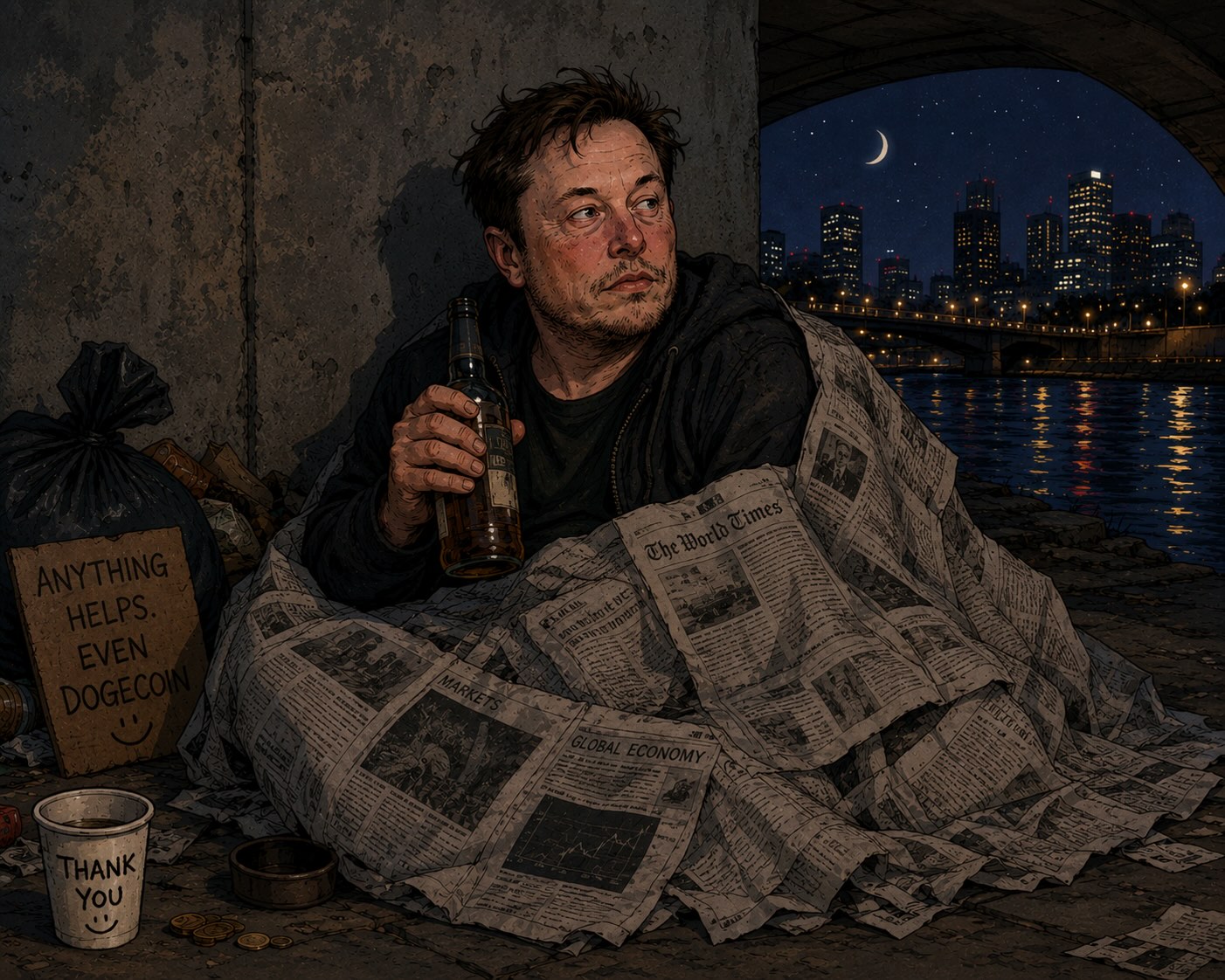
The different lives that might have been brought by twists of fate!

A sampling of my writing for newspapers and magazines from around the world, including selected reprints and long-form pieces.
I tell the story of Jack and Donna Wright, who lived in their house in Kingston, Ontario with their 640 cats, the most in any house in North America.
Read the full article →The story of Canada’s least glamorous criminal, the grease thief. But sludge from the dinner grill holds far more value than you might have expected.
Read the full article →